
No More “Messinga”: How Kenya Is Preparing for the Commonwealth Games in Glasgow
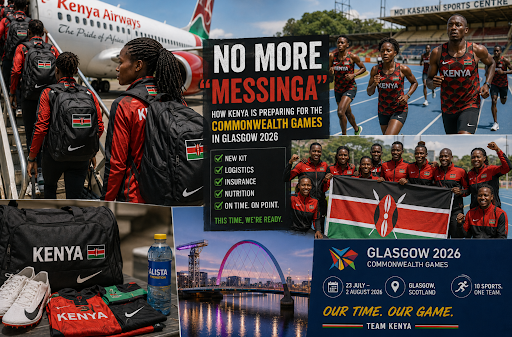
No More “Messinga”: How Kenya Is Preparing for the Commonwealth Games in Glasgow
NOC-K Promises New Kit
A sports official in Nairobi once told me: “In Kenya, we know how to win on the track, but we lose in hotels and airports.” At the time, I didn’t take it seriously. I thought he was joking.
Then came Rio 2016.
The whole world saw Kenyan athletes sleeping at the airport because they hadn’t been checked into the Olympic Village. The kit arrived late. There was no money for pocket expenses. And journalists weren’t writing about medals – they were writing about how Kenya had embarrassed itself on the eve of the Olympics.
Now things are different.
Six years later. Team Kenya is preparing for the Commonwealth Games in Glasgow (23 July – 2 August 2026). The squad includes 52 track and field athletes and dozens more in other disciplines. The National Olympic Committee of Kenya (NOC-K) promises: logistics, kit, nutrition, insurance – everything is under control.
While fans discuss the team’s chances on social media and on platforms like football betting, a real revolution is taking place inside the Kasarani camp. Its essence: no more “messinga.”
What Went Wrong in the Past
Kenya’s sporting history is full of victories. But even more so – of stories about how those victories were achieved despite the system.
Here’s what veterans recall:
- Rio 2016. Part of the delegation didn’t make it into the Olympic Village. Athletes spent the night at the airport.
- Birmingham 2022. The kit arrived the day before the start. Some ran in boots that didn’t fit.
- Constant payment delays. Athletes waited months for prize money and daily allowances.
- No insurance. An injury often meant the end of a career – and debts for treatment.
- Poor logistics. Flights with three connections, lost luggage, no proper meals on the road.
Athlete Welfare Representative Stanley Mutuma says bluntly: “There were many lessons after that mess in 2016. Now the kit has already arrived, and the athletes will be taken care of. When an athlete feels supported, they can perform. I don’t think such a mess will happen again.”
What Has Changed in 2026
This time, NOC-K approached the task like a military operation.
Since mid‑June, the team has been living and training at the Moi Kasarani Sports Centre. The schedule is minute‑by‑minute. Nutrition is tailored to individual needs. The medical team is on duty around the clock.
Here’s what has been done over the past few months:
- Kit. Uniforms, boots, equipment – all delivered in advance and distributed to athletes.
- Logistics. A clear flight schedule: the first batch (powerlifting para‑athletes) departed on 15 July, the rest follow on schedule. The final group leaves on 23 July.
- Insurance. NOC‑K has signed contracts covering injuries and medical evacuation.
- Nutrition. Bidco Africa has become the official hydration partner. Athletes are provided with Alista drinks.
- Prize money. The government has increased medal bonuses.
- Psychological preparation. The team includes psychologists working on mental conditioning.
Squad: Stars and Newcomers
Team Kenya for the Commonwealth Games is one of the strongest in recent years.
Here are the key names:
| Sport | Athlete | Achievement |
| 100 m | Ferdinand Omanyala | Reigning Commonwealth champion (2022), African record holder |
| 800 m (women) | Lilian Odira | 2026 World Champion, PB – 1:56.19 |
| 1500 m / Mile | Timothy Cheruiyot | 2019 World Champion, Commonwealth silver medallist |
| Javelin | Julius Yego | Commonwealth bronze medallist (2022) |
| 400 m | Boniface Mweresa | PB – 44.96, seasonal – 44.5 |
| 3000 m Steeplechase | Faith Cherotich | Representing Kenya in women’s steeplechase |
| Judo | Zeddy Cherotich (captain) | African Judo Championships bronze medallist |
In total, the athletics team has 52 members. Plus 3×3 basketball (men and women), boxing, judo, para‑powerlifting, and other disciplines.
Athletics Kenya President Jackson Tuwei stated: “We have assembled a team capable of bringing home medals. They are expected to carry Kenya’s flag high.”
Goals: More Medals Than in Birmingham
Team captain, judoka Zeddy Cherotich, speaks without hesitation: “Everyone is ready for the Games. We will do our best to carry Kenya’s flag high. Our goal now is to get more medals than at the last Commonwealth Games.”
Legendary sprinter and coach Elkana Nyangau adds: “We’ve prepared very well. We expect to perform better than in Birmingham because this time we have a very strong team.”
Athletes are setting ambitious targets. Boniface Mweresa wants a medal in the individual relay and gold in the mixed event. George Mutinda speaks of readiness to break Commonwealth Games records, especially in the 4x400m relay.
Why Glasgow 2026 Matters More Than It Seems
NOC‑K views these Games not as a routine tournament, but as a springboard to the 2028 Los Angeles Olympics.
NOC‑K President Shadrack Maluki explains: “These Games are very important. Firstly, they also serve as qualification for the Los Angeles Olympics. Athletes who compete there will earn points that will help them qualify for LA 2028.”
In addition, Kenya will be closely watching its rivals. “We will go there to monitor how other countries perform,” says Maluki. “This will help us shape our strategy for LA 2028.”
What’s Still Missing
Despite the progress, problems remain.
Captain Cherotich admits: “We’ve improved, but we still need more equipment and facilities. Some athletes struggle with access to gyms. We hope support will increase, especially for young players.”
President Maluki calls on businesses to step up: “We can’t just pick medals like apples from trees. They need to be prepared mentally and emotionally.”
Still, compared to Rio 2016, the progress is obvious. For the first time in many years, Kenya is approaching a major tournament not with pleas for help, but with a clear plan.
The first batch of athletes is already on its way. The rest are in Kasarani, on their final training session.
In a week, they will take the start in Glasgow. No airport overnight stays. No late‑arriving kit. No humiliation.
And if they win – it will be a victory not only on the track, but beyond it.
How many medals do you think Kenya will take in Glasgow?
FAQ
- When do the Glasgow Commonwealth Games start?
The tournament runs from 23 July to 2 August 2026. - Which sports are featured?
A total of 10 core sports. Kenya is competing in athletics, 3×3 basketball, judo, boxing, powerlifting, cycling, and other disciplines. - Who is leading Team Kenya?
The team captain is judoka Zeddy Cherotich. Other leaders include Ferdinand Omanyala (100m), Lilian Odira (800m), and Timothy Cheruiyot (mile). - How does the 2026 preparation differ from previous years?
NOC‑K has focused on early preparation, improved logistics, timely kit delivery, athlete insurance, and corporate partnerships. - Are these Games a qualifier for the Olympics?
Yes. Results in Glasgow will give athletes ranking points for selection to the 2028 Olympic Games in Los Angeles.

Company Information
- Total Jobs 667 Jobs
- Location Tanzania