
Sports Betting Strategies in Tanzania: Bet Smart
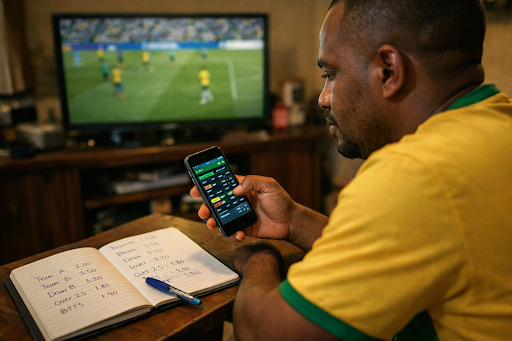
Sports Betting Strategies in Tanzania: Bet Smart
Sports Betting Strategies In Tanzania: A Pro-Level Framework
Sports betting strategies in Tanzania work best when you treat them like a decision system, not a prediction contest. With Spinbetter TZ, you can apply this mindset in a familiar environment. The local reality is simple: most punters are heavy on “team-wins” instincts and light on pricing, so value often appears where the crowd is loudest—especially around the NBC Premier League and big CAF nights.
Fundamentals of a Professional Sports Bet
A professional sports bet starts before you pick a team.
You need three inputs:
- Your probability (your estimate of how often the outcome should happen)
- The market price (the odds you’re offered
- Stake sizing (how much you risk relative to bankroll)
If you only do #2, you’re gambling on vibes. If you do #1 and #2 but ignore #3, you’re one bad run away from tilting.
A useful mental model: a bet is a purchase. You’re buying a price. If the price is wrong, you buy. If it’s right, you pass—no matter how much you “like” the selection.
Top Rated Sports Betting Strategies for Tanzanian Punters
Some strategies are popular because they feel exciting. Others survive because they’re mathematically sane.
Here are the approaches that tend to hold up for Tanzanian punters when executed with discipline:
| Strategy | What it’s good for | The catch | Best use-case |
| Value betting | Sustainable edge | Requires records + patience | Pre-match markets where you can compare multiple operators |
| Line shopping (best price hunting) | “Free” long-term improvement | Needs accounts across books | High-volume bettors, any league |
| In-play | Exploiting tempo swings | Odds update fast; mistakes are costly | Matches you can watch with stats |
| Specialization (one league) | Cleaner reads + faster model learning | Smaller markets can move quickly | NBC Premier League, CAF ties involving TZ clubs |
Line shopping is especially underrated: even tiny odds differences compound over a season.
The 1-3-2-6 Betting System
The 1-3-2-6 betting system is a classic “progression” staking plan: you wager 1 unit, then 3, then 2, then 6, and reset after a loss (or after finishing the sequence). It’s commonly discussed for even-ish odds bets.
Here’s how it looks with a 10,000 TSh unit:
| Step | Wager (units) | Wager (TSh) | If you win… | If you lose… |
| 1 | 1 | 10,000 | move to step 2 | reset to step 1 |
| 2 | 3 | 30,000 | move to step 3 | reset to step 1 |
| 3 | 2 | 20,000 | move to step 4 | reset to step 1 |
| 4 | 6 | 60,000 | complete cycle, reset | reset to step 1 |
Worth it if: you’re using it as a discipline tool to stop random staking and you’re betting close-to-even prices.
The trade-off: it doesn’t create an edge. If your picks have no value, the progression just changes how you lose (and can spike risk on step 4).
If you like the structure, steal the structure—then apply it only to bets you already rate as +E.V. (we’ll define that below).
Specializing in the NBC Premier League and CAF Champions League
NBC Premier League: The biggest informational edges often come from local context (travel, rotation, pitch conditions, motivation) before the broader market reacts. League basics like format and top teams are easy to track, but your advantage is how quickly you interpret changes week-to-week.
CAF Champions League: The market tends to price “brand names” heavily, and public sentiment can overweight recent highlight results. Tanzanian clubs in CAF spots draw emotional money, so prices can drift away from the true probability faster than you’d expect.
One practical trick: build a tiny “notes database” for only these competitions—injuries, suspensions, travel, last 5 match tempo, and lineup patterns. Not fancy. Just consistent.
Live Betting Tactics for Real-Time Opportunities
Live betting is where many punters lose discipline because it feels like you can fix a pre-match opinion in real time.
Live betting works when you have a trigger and a limit:
- Trigger examples: red card + formation shift; visible fatigue; unexpected press intensity; shot quality trend.
- Limit: you pre-decide “max 2 in-play bets per match” or “max 1.5% bankroll exposure per match.”
Different sportsbooks promote in-play as a core feature, with fast-changing odds and live interfaces—great for opportunities, brutal for impulsive clicking.
Micro-warning that saves money: if your stream is delayed, treat live odds like a tax. The price is reacting to events you haven’t seen yet.
The Statistical Approach to Modern Betting Opportunities
“Statistical” doesn’t mean building a PhD model. It means:
- converting odds to probability,
- estimating your own chance,
- betting only when there’s a gap big enough to matter.
Using a Statistical Model to Find Value
Start small:
- Choose one market (e.g., 1X2, totals, BTTS) in one league
- Track closing odds (what the line ends at).
- Compare your bets’ closing line movement: if your bets consistently beat the close, you’re likely doing something right—even before profits appear.
You can stay lightweight: a spreadsheet with match date, league, bet type, odds taken, closing odds, result.
This is the kind of “professional bettors” habit that looks boring… until it pays rent.
Analyzing Betting Trends and Public Sentiment in Tanzania
Public sentiment is real, especially around:
- derby matches (e.g., huge rivalries),
- favorites with big fanbases,
- recent “hot streak” narratives.
You don’t need a national polling system. You just need to notice where the crowd money likely goes—and then ask: did the line move because of new information, or because of popularity?
That difference is where value sneaks in.
Calculating Expected Value for Maximum Gains
Expected value is the cleanest way to stop arguing with yourself.
A common form (decimal odds) is:
EV = (p × odds × wager) − ((1 − p) × stake)
Where p is your true probability estimate.
If it’s positive, you’re making a good purchase—even if today’s bet loses.
The Mathematical Formula for Positive Ex. Value
Here’s a quick example:
- You believe an outcome hits 55% of the time (p = 0.55)
- Bookmaker offers 2.10 decimal odds
- Bet = 10,000 TSh
EV = (0.55 × 2.10 × 10,000) − (0.45 × 10,000)
EV = (11,550) − (4,500)
+7,050 TSh per bet in the long run.
Key point: your p must be honest. If you routinely “feel” 55% but it’s actually 48%, you’re donating.
Identifying + EV Opportunities in Local Sportsbooks
In Tanzania, +EV opportunities often show up when:
- smaller local leagues are priced lazily,
- there’s emotional money on a popular side,
- one sportsbook is slow to adjust after team news.
Practically: open 2–4 books, compare odds, and record what you took. Even if you can’t “prove” +EV instantly, you’ll see patterns in your tracking.
Also, make sure you’re using regulated operators. The Gaming Board of Tanzania provides official contact points for help and inquiries.
Shopping for Lines to Get the Best Betting Odds
Line shopping is exactly what it sounds like: you take the best available price across multiple sportsbooks.
This matters because margin is always there; your job is to pay the smallest “tax” possible. Bookmaker margin (overround/vig) is the embedded edge that makes the book profitable.
If you bet frequently, better odds beat better opinions surprisingly often.
Strategies for Long-Term Profitability and Growth
Long term thinking is less about one “winning bet” and more about avoiding the slow leaks and financial risks:
- overbetting,
- chasing losses,
- ignoring price,
- betting too many markets you don’t understand.
Your edge might be small. Your discipline is what makes it visible.
Bankroll Management
Pick a bankroll number that’s real (money you can afford to lose without messing up your life). Then set a budget rule:
- Conservative: 0.5%–1% bankroll per wager;
- Aggressive: 1%–2% (only if you track and you’re stable emotionally).
A simple staking guide:
| Bettor type | Unit size | When to use |
| New / inconsistent | 0.5% | While you learn markets + build records |
| Improving with tracking | 1% | When your process is repeatable |
| Advanced + proven edge | 1–2% | Only with discipline and verified performance |
If you’re doing “increasing bets” after wins, do it with caps. Winning streaks end.
Performance Tracking and Avoiding Emotional Wagering
Track at least these fields:
- date, league, market, odds, bet, result, notes (why you bet it);
Then add one more: “Did I follow my rules?” That single checkbox exposes emotional decision-making fast.
Emotional wagering usually comes from one of three triggers:
- you’re down and want it back now,
- you’re up and feel invincible,
- you’re betting your favorite team and can’t price it honestly.
The fix isn’t motivation—it’s reducing decisions: fewer bets, clearer rules, and hard limits for a brighter future.
Conclusion
The best betting strategies in Tanzania aren’t secret systems with high chance of winning —they’re repeatable habits: price-first thinking, value discipline, line shopping across multiple sportsbooks, and a bankroll plan you actually respect.
If you want one “next step” that moves the needle this week: start tracking every bet and calculate implied probability from the odds. Everything else gets easier once you see your own patterns and minimize the risks when betting on different sports.
FAQs
What is the best betting strategy for beginners in Tanzania?
Start with one league (ideally the NBC Premier League), one market type, and focus on disciplined bet sizing and tracking.
How do I calculate the Expected Value of a sports bet?
Use decimal odds: E V = (p × odds × stake) − ((1 − p) × bet), where p is your estimated true probability. If it’s positive, it’s a profitable bet over the long run.
Is a statistical model necessary for a professional betting system?
Not strictly. A lightweight statistical approach and tracking results—can be enough.
How does line shopping improve my long-term profitability?
By consistently taking better odds than the alternatives, you reduce the bookmaker margin you pay and increase your average return.
Which Tanzanian bookies offer the best betting margins?
Margins vary by sport and market, and many operators don’t publish them directly.

Company Information
- Total Jobs 667 Jobs
- Location Tanzania